Healthspan Lab

At the HSG Healthspan Lab, we explore the intersection of health, human performance, entrepreneurship, and longevity.
 

Enable This Content

Content required confirmation

Accept
Show More

Vision

Our research examines how physiological health influences the people behind organizations and economic decisions, from entrepreneurs and executives to investors and other decision-makers. We investigate factors such as sleep, stress, metabolic health, and other physiological processes to better understand their role in performance, judgment, decision-making, and well-being.

A further focus lies at the intersection of longevity, innovation, and entrepreneurship. Advances in prevention, biomarkers, health technologies, and data-driven approaches are creating new opportunities for entrepreneurs, investors, and society. We study these developments from both scientific and entrepreneurial perspectives.

Our ambition extends beyond generating scientific knowledge. We aim to translate research into real-world impact by connecting scientific insights with new concepts, entrepreneurial solutions, and knowledge transfer. Through our research, publications, podcast, and collaborations, we bring together researchers, entrepreneurs, investors, and practitioners to contribute to healthier, longer, and more productive lives.


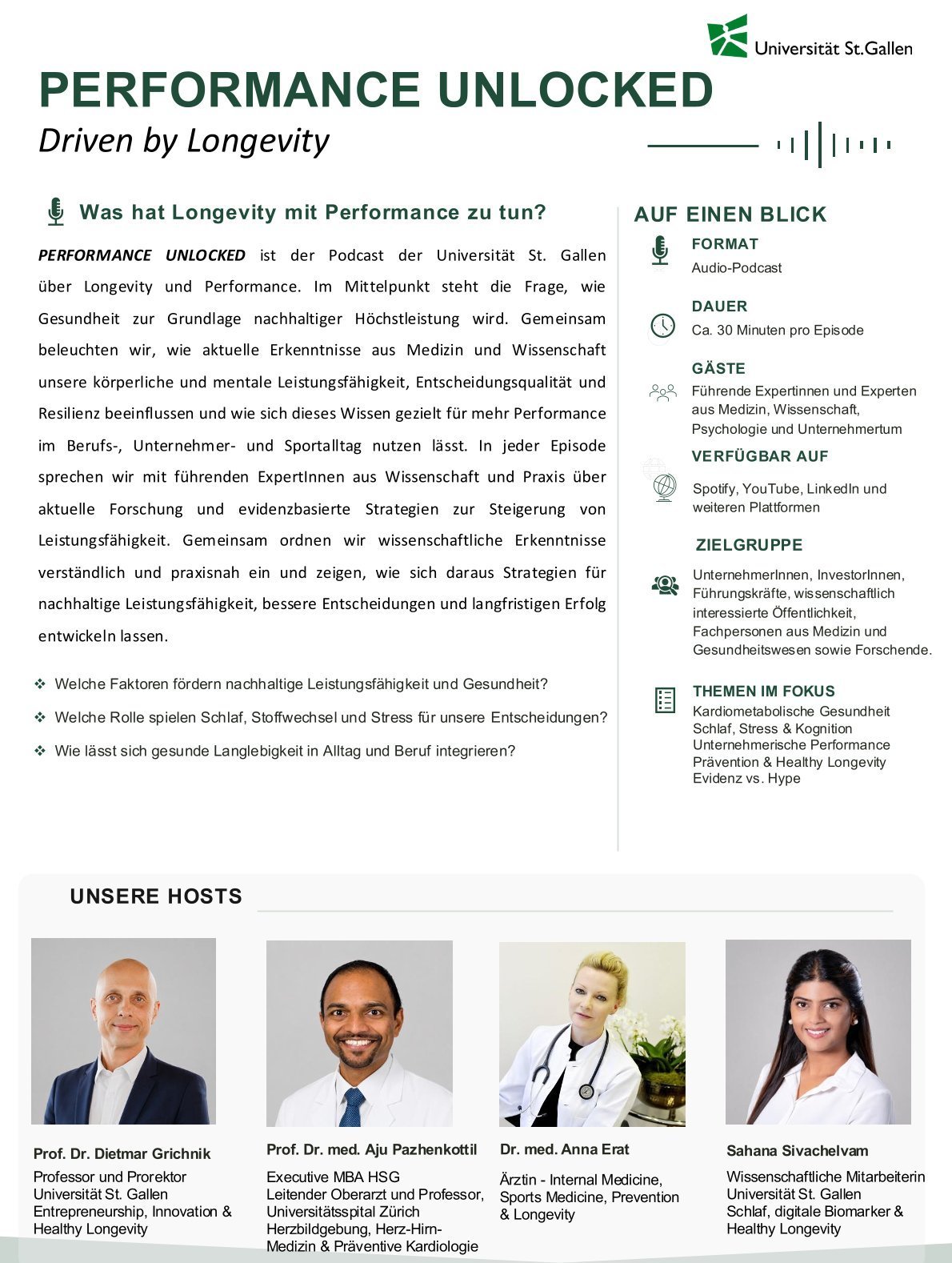
Podcast: Performance Unlocked – Driven by Longevity


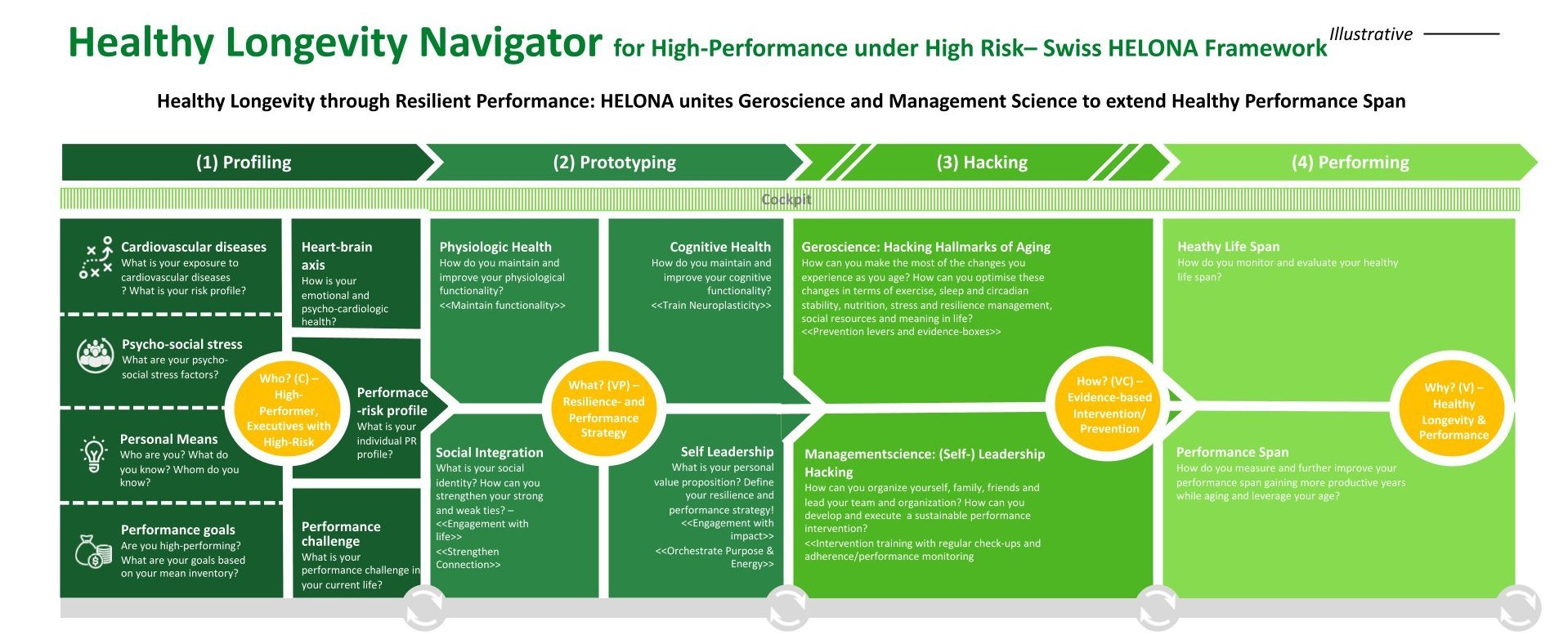
HELONA Framework

Developed by Prof. Dr. Dietmar Grichnik and Prof. Dr. med. Aju Pazhenkottil, the Healthy Aging Navigator brings together entrepreneurial and medical perspectives to translate scientific evidence and clinical expertise into a practical framework for healthy longevity. Integrating cardiovascular health, resilience, sleep, nutrition, physical activity, stress management, and social resources, the project takes a holistic approach to understanding the factors that support long-term health and sustainable performance. Particular attention is given to leaders and high performers, whose demanding professional environments can place distinct pressures on health and well-being. By connecting medical expertise with research on entrepreneurship and human performance, the Healthy Aging Navigator aims to make evidence-based insights actionable in both professional and everyday life.


Research at the HSG Healthspan Lab

1) Unraveling the role of neurotransmitters in stress buffering: A comparative study of individuals with strong and weak entrepreneurial intentions

Robert Schreiber, Dietmar Grichnik, Dean A. Shepherd, Joakim Wincent, Philippe N. Tobler, Geraldine Gvozdanovic

Journal of Business Venturing Insights, 25 (2026)

About the Study

This study examines how stress affects key characteristics of the entrepreneurial mindset and whether neurochemical processes can buffer these effects. In a double-blind, placebo-controlled experiment with 119 participants, the study shows that stress can reduce optimism and risk propensity, while enhanced dopaminergic and noradrenergic activity can buffer these negative effects. The findings further suggest that this buffering effect is stronger among individuals with higher entrepreneurial intentions.

Publication


2) An Attractiveness Bias? How Women Entrepreneurs’ Physical Appearance Affects Men Investors

Robert Schreiber, Manuel Hess, Dietmar Grichnik, Dean A. Shepherd, Philippe N. Tobler & Joakim Wincent

Journal of Management (2024), 51(7), 3148–3180

About the Study

This study examines how women entrepreneurs’ physical attractiveness influences male investors’ evaluations. In an experiment with 106 experienced investors, attractiveness was associated with higher perceived competence and increased cortisol responses, which in turn shaped investors’ screening evaluations. The findings highlight how both cognitive and physiological mechanisms can contribute to bias in early-stage investment decisions.

Publication


3) Unraveling the Role of Neurotransmitters in Stress Buffering: A Comparative Study of Individuals with Strong and Weak Entrepreneurial Intentions

Robert Schreiber, Dietmar Grichnik, Dean A. Shepherd, Joakim Wincent, Philippe N. Tobler, Geraldine Gvozdanovic

Journal of Business Venturing Insights, 25 (2026), e00617

About the Study

This study examines how stress influences key characteristics of the entrepreneurial mindset and whether neurotransmitter activity can buffer its negative effects. In a double-blind, placebo-controlled experiment involving 119 participants, the researchers investigated the roles of dopamine and noradrenaline in shaping optimism and risk propensity under stress. The findings suggest that enhanced neurotransmitter activity can help buffer stress-related effects, particularly among individuals with stronger entrepreneurial intentions. The study highlights the importance of neurobiological mechanisms in understanding how individuals respond to stress in entrepreneurial contexts.

Publication


4)  How Sleep Influences Entrepreneurial Performance: Evidence from a Longitudinal Field Study Across Different Cognitive Tasks

Sahana Sivachelvam, Robert Schreiber, Dietmar Grichnik, Dean Shepherd, Joakim Wincent

Manuscript under review

About the Study

This study investigates how sleep influences entrepreneurs’ cognitive performance, particularly under time pressure. In a 28-day field study involving 131 entrepreneurs, wearable sleep-tracking technology was combined with cognitive tasks assessing analytical problem-solving and creative business model ideation. By examining the relationship between different dimensions of sleep and cognitive performance, the research provides new insights into the role of physiological recovery in entrepreneurial decision-making and performance.


5) The Physiology of Investment Decision-Making: The Role of Glycemic Regulation in Venture Evaluation

Sahana Sivachelvam, Robert Schreiber, Dietmar Grichnik, Petrit Ademi, Joakim Wincent

Manuscript in preparation

About the Study

This study explores how glucose regulation and sleep relate to investors’ decision-making performance. In a 14-day field study involving 93 investors, continuous glucose monitoring and wearable sleep-tracking technology were combined with structured investment decision-making tasks. By investigating the interplay between metabolic regulation, sleep, and investment evaluations, the research contributes to a deeper understanding of the physiological factors associated with financial decision-making and investment performance.



From Research to Impact

Co-founded by Dr. Robert Schreiber from the Healthspan Lab, ALPINA+SANA translates scientific insights into innovative solutions for the prevention and treatment of malnutrition. Combining nutrition science, technology, and entrepreneurship, the venture develops evidence-based nutritional products and digital approaches to improve nutritional care and quality of life.

Dr. Robert Schreiber, CEO & Co-Founder


Co-founded by Dr. Michael Greger from the Healthspan Lab, NOXBLANC translates insights from sleep research into technology designed to optimize the sleep environment. Combining research, engineering, and entrepreneurship, the venture develops an innovative mattress with individually adjustable firmness and temperature control, complemented by optional sensor-based sleep tracking.

Dr. Michael Greger, CEO & Co-Founder



Led by Empa, with Prof. Dr. Tobias Kowatsch contributing his expertise in digital health interventions, PreDiabeTx brings together research and industry partners to advance the prevention of type 2 diabetes. Combining artificial intelligence, wearable technologies, and personalized digital therapeutics, the initiative aims to translate scientific insights into scalable, evidence-based solutions for early risk detection, sustainable lifestyle changes, and improved metabolic health.

Prof. Dr. Tobias Kowatsch


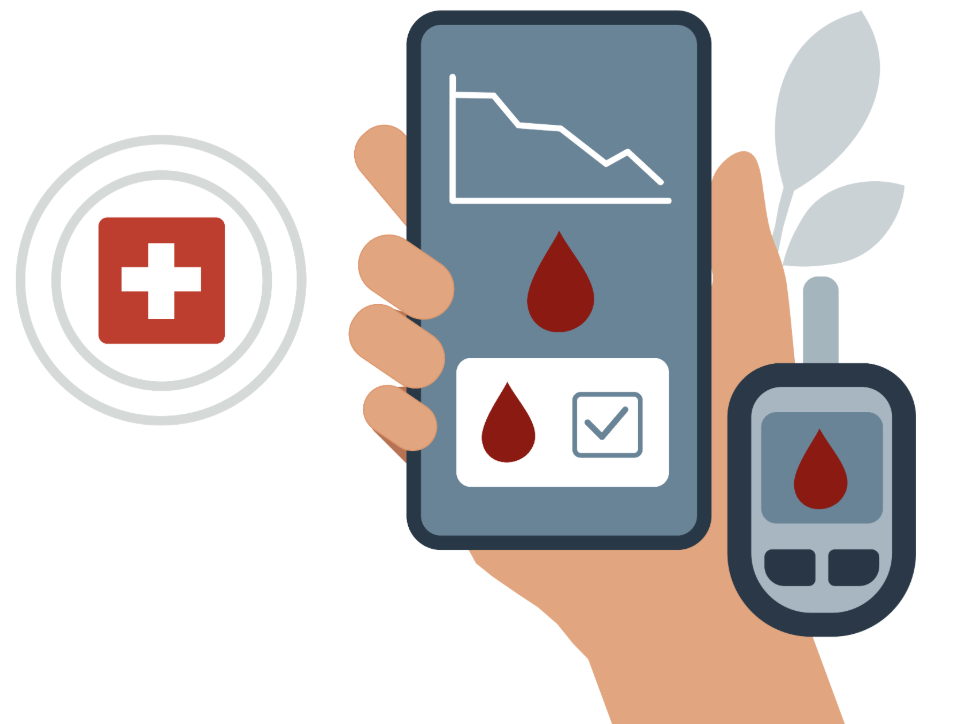
Led by a research team at the Centre for Digital Health Interventions, including Prof. Dr. Tobias Kowatsch, GLOW UP explores how wearable technologies and digital health tools can support the early detection and prevention of type 2 diabetes. By combining continuous glucose monitoring with real-world lifestyle data on sleep, physical activity, nutrition, and stress, the study aims to identify digital biomarkers of metabolic health. The project seeks to translate these insights into personalized, data-driven approaches for early risk assessment and preventive healthcare.

Prof. Dr. Tobias Kowatsch


Awards & Impact

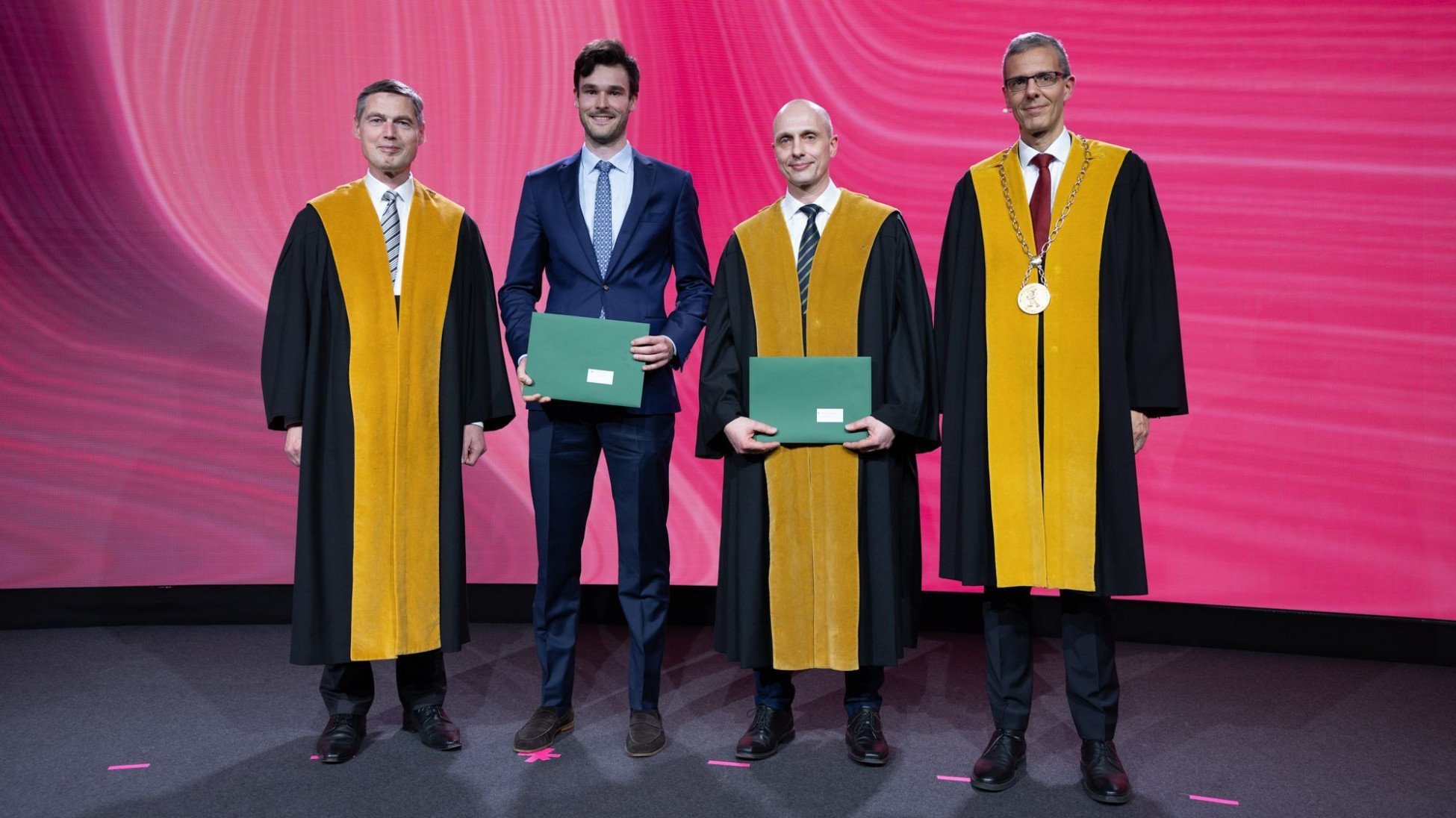
HSG Impact Award 2026

The Innosuisse innovation project “AI-based nutritional assessment of malnourished patients in care facilities” was named one of three winners of the HSG Impact Award 2026.

Developed at the HSG Healthspan Lab by Prof. Dr. Dietmar Grichnik and Dr. Robert Schreiber, the project led to ALPINA+SANA and an AI-powered system that detects and assesses patients’ food intake in real time. With an accuracy of around 90%, including for complex meals, the technology supports the early detection of malnutrition while reducing the need for manual documentation. Initial implementation at Kantonsspital Winterthur demonstrates the project’s practical impact, including reduced documentation effort and treatment costs as well as improved patient care. More than 50 hospitals are already exploring adoption.

The HSG Impact Award recognizes research at the University of St.Gallen that creates tangible impact for society and translates scientific knowledge into practice.

Enable This Content

Content required confirmation

Accept
Show More


2026 W.A. de Vigier Award

The W.A. de Vigier Award is Switzerland’s oldest award for young entrepreneurs and one of the country’s most highly endowed startup prizes. Each year, the foundation recognizes promising young ventures based on the entrepreneurial profile of their founders, innovation, societal relevance, technical and financial feasibility, market potential, and competitiveness. In 2026, five winners were selected from more than 200 applicants, with each receiving CHF 120,000 in non-dilutive funding. ALPINA+SANA, led by CEO and co-founder Dr. Robert Schreiber from the HSG Healthspan Lab, was named one of the five 2026 winners.

The company addresses malnutrition in healthcare by combining early detection with targeted nutritional intervention. Its AI-powered monitoring system analyzes patients’ food intake from meal trays, helping healthcare providers identify patients at risk of malnutrition earlier. Patients can then receive specially developed medical nutrition products designed to support adequate and sustained nutritional intake. By integrating digital monitoring and nutritional treatment, ALPINA+SANA aims to improve patient care while reducing manual documentation and the healthcare burden associated with malnutrition. Its combination of technological innovation, a significant unmet healthcare need, and the potential for real-world impact contributed to its recognition with the 2026 W.A. de Vigier Award.

Enable This Content

Content required confirmation

Accept
Show More
Enable This Content

Content required confirmation

Accept
Show More

Lab Team

Dietmar Grichnik

Prof. Dr.

Professor of Entrepreneurship

ITEM-HSG
Büro 2-246
Dufourstrasse 40a
9000 St. Gallen

Tobias Kowatsch

Prof. Dr.

Extraordinary Professor

Med-HSG
24-01-207 (ZIG ITEM-HSG)
Dufourstrasse 40a
9000 St. Gallen

Robert Schreiber

Dr.

Research Associate

GCEI-HSG
Büro 2-214
Dufourstrasse 40a
9000 St. Gallen

Sahana Sivachelvam

M.Sc. ETH

Research Associate

ITEM-HSG
Büro 2-214
Dufourstrasse 40a
9000 St. Gallen

Affiliated Team Members

north